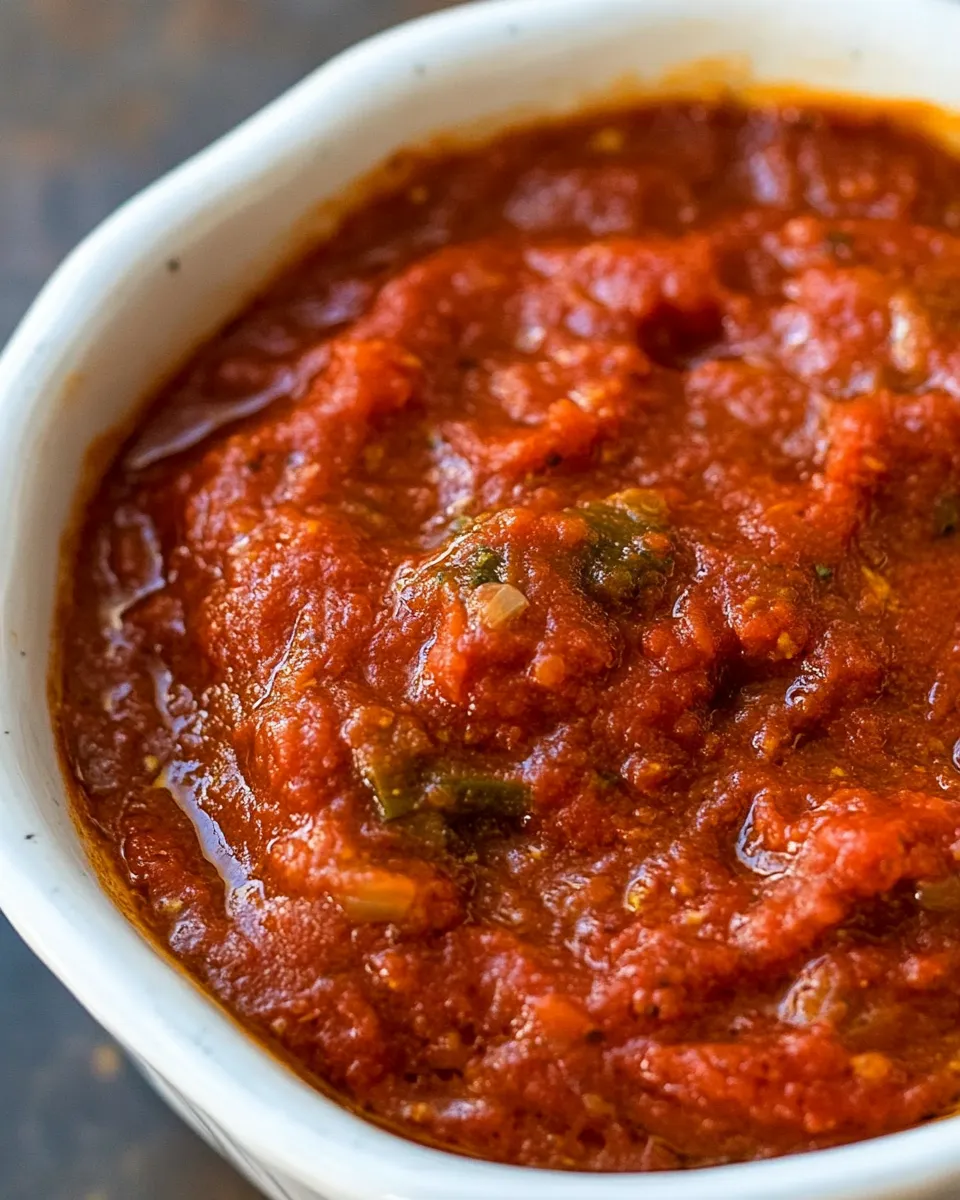
I make this sauce every week. It’s simple, forgiving and bright — exactly what you want under bubbling cheese. It starts with good canned tomatoes, garlic browned just enough to wake up their aroma, and basil for that familiar pizza lift. No long, fussy reductions. Just steady heat and sensible timing.
In this post I’ll walk you through exactly what I use, why each step matters, and the little things that keep the sauce from going bitter or watery. You’ll get the exact steps I follow, plus practical gear notes, common mistakes, and storage tips so you can make it the way I do in my kitchen.
Ingredient Checklist
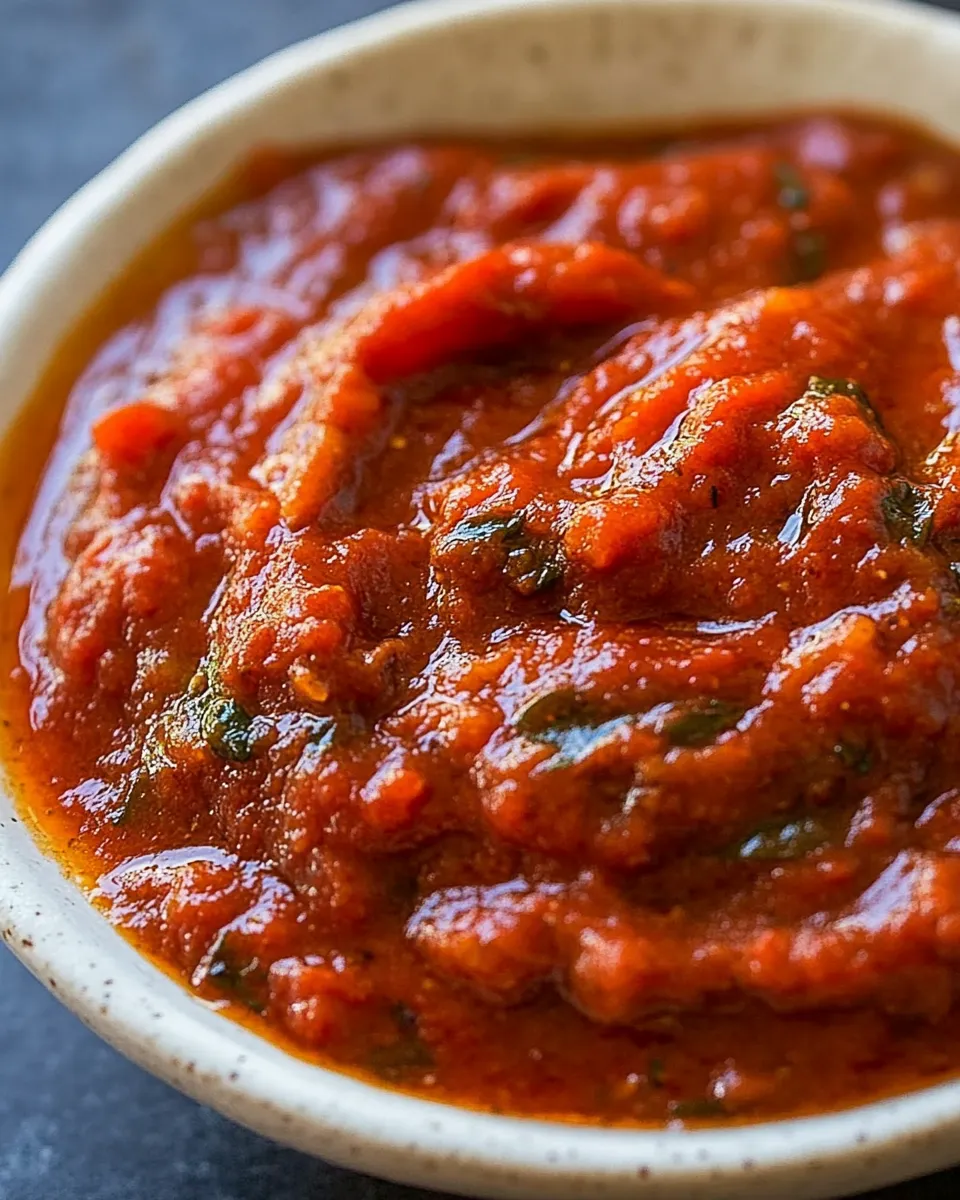
Ingredients
- Mesh splatter screen — optional but nice to have; prevents hot tomato from popping onto the stove when you add the can.
- ¼ cup olive oil — the cooking fat that gently extracts garlic flavor and carries it through the sauce.
- 4 cloves garlic — pressed or minced; provides the savory backbone. Don’t let it burn.
- 128-ounce can crushed tomatoes — the main body of the sauce; choose a brand you like because this is most of the flavor.
- 8 fresh basil leaves — thinly sliced OR 1 ½ teaspoons dried basil — fresh brightens the sauce; dried is an easy pantry substitute.
- ½ teaspoon (2g) sugar — evens out acidity in canned tomatoes and rounds the flavor.
Homemade Pizza Sauce in Steps
- Place a large pot on the stove and add ¼ cup olive oil. Heat over medium until the oil shimmers (not smoking). Have the mesh splatter screen nearby if you plan to use it.
- Add the 4 cloves garlic (pressed or minced) to the hot oil. Stir and cook until the garlic is fragrant and just beginning to brown, about 30 seconds to 1 minute. Do not let the garlic burn.
- Carefully add the entire 128-ounce can crushed tomatoes to the pot (the oil may sizzle and splash). If using, place the mesh splatter screen over the pot as you add them. Add ½ teaspoon sugar and the basil (either 8 fresh basil leaves thinly sliced or 1½ teaspoons dried basil). Stir to combine.
- Increase heat briefly to bring the mixture to a gentle simmer, then reduce the heat to maintain a low simmer.
- Simmer uncovered for 20–30 minutes, stirring occasionally, until the sauce has thickened and reduced slightly to your desired consistency. (Note: starting with a 128-ounce can will not reduce to 1½ cups.)
- Remove the pot from the heat and let the sauce sit a few minutes before using or storing. Adjust consistency by simmering longer if you want it thicker.
Why It Works Every Time
This recipe is reliable because it follows basic, predictable chemistry and a gentle technique. Olive oil at the beginning does two jobs: it acts as a flavor carrier and protects the garlic from instant scorching. Brown the garlic only briefly — just until it smells sweet and aromatic — and you’ll coax that savory note into the oil without bitterness.
Using crushed tomatoes gives you a texture that grips dough and cheese. They’re already broken down enough that a 20–30 minute simmer concentrates flavor without the need for all-day cooking. A small amount of sugar balances the natural acidity in canned tomatoes, bringing out the tomato’s sweetness so it doesn’t taste flat or tart.
Basil, fresh or dried, finishes the sauce with herbal lift. Fresh basil gives a bright, green note that stands up to cheese, while dried basil dissolves into the sauce and distributes that flavor evenly. The low simmer lets flavors marry without evaporating away into a paste — which is important if you want a sauce that spreads easily but still tastes concentrated.
Quick Replacement Ideas
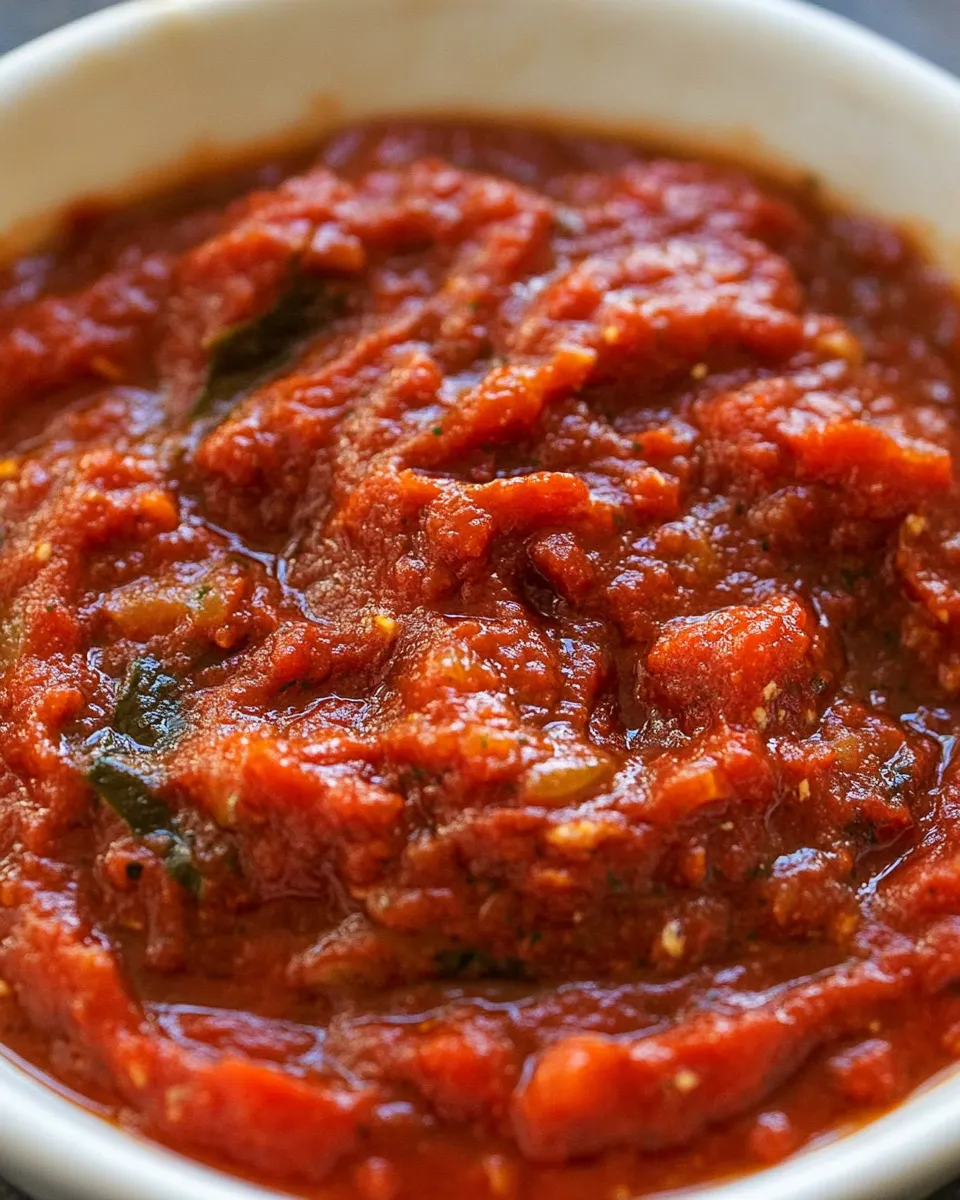
- Fresh basil → Dried basil: If you’re out of fresh, use the listed 1½ teaspoons dried basil; it integrates well during simmering.
- Large 128‑oz can → Multiple smaller cans: If you can’t find a 128‑ounce can, combine smaller cans to reach the same total volume.
- Sugar → omit or reduce: If your tomatoes are naturally sweet, you can skip the ½ teaspoon of sugar or taste and add less.
Gear Checklist
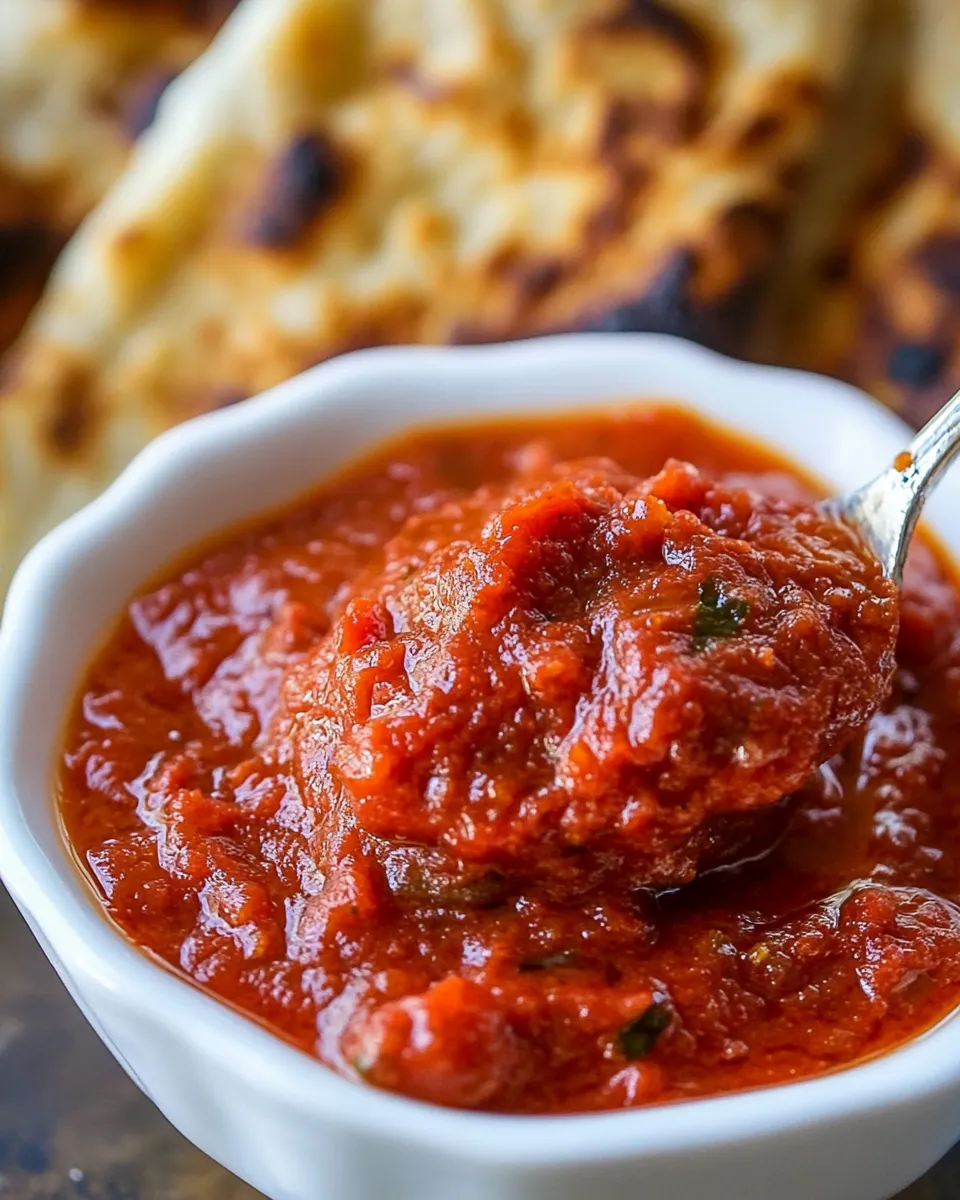
- Large, heavy-bottomed pot — provides even heat and room for simmering.
- Mesh splatter screen — optional but useful when adding a can to hot oil.
- Wooden spoon or heatproof spatula — for stirring without scratching.
- Can opener — for the 128-ounce can.
- Measuring spoons and a ¼-cup measure — to be precise with oil and sugar.
- Knife and cutting board — to mince or press the garlic and slice fresh basil if using.
Mistakes That Ruin Homemade Pizza Sauce
- Burning the garlic: Garlic goes from fragrant to bitter quickly. Remove it from direct high heat once it turns golden and smells fragrant.
- Cooking too hot: A rolling boil will make the sauce lose freshness and can taste cooked-flat. Keep it at a gentle simmer.
- Over-reducing: Simmering past the point of thickening will make the sauce too concentrated for spreading on dough. Watch the clock and texture.
- Assuming final volume: The recipe starts with a very large can. Don’t expect a tiny yield after simmering — the note is there to prevent surprises.
- Skipping the taste test: Not tasting before using on pizza is a missed chance to balance acidity, salt, or sweetness.
Smart Substitutions
Keep substitutions simple to preserve the sauce’s balance. The recipe already offers an either/or for basil; use fresh for brightness and dried for convenience. If you’re in a pinch and have to change something, prioritize texture and acid balance.
- Basil: Fresh or dried are both listed — use whichever you have. Add dried earlier so it hydrates; add fresh near the end for aroma.
- Tomato source: Use smaller cans that add up to the same volume if you don’t have a single 128‑ounce can. The flavor will be essentially the same if the brands are similar.
- Sugar: The ½ teaspoon listed is small and easy to reduce or omit if your tomatoes are sweet. Try it without and add a pinch only if the sauce tastes too acidic.
Pro Perspective
When I make sauce for pizza versus pasta, I think about texture and timing. For pizza you want a slightly looser sauce that spreads in a thin, even layer under the cheese. That means a shorter simmer or a gentle splash of water if you’ve reduced too far. For pasta, a thicker, more spoonable sauce is fine; simmer a little longer to concentrate the flavors.
Here are a few pro-level habits I use:
- Always bloom the garlic in oil first. It creates a flavored base that distributes evenly.
- Taste as you go. You’re aiming for balance — a hint of sweetness to offset acidity and a fresh herbal note from the basil.
- Don’t try to rush the simmer. The short, low simmer here is what keeps the tomato flavor bright and fresh instead of jammy.
Save It for Later
Cool the sauce to near room temperature before storing. Transfer to airtight containers and refrigerate for up to five days. For longer storage, portion into freezer-safe containers or ice cube trays and freeze for up to three months. Thaw in the refrigerator overnight or gently warm on the stove before using.
Portioning is your friend: make enough to have a ready-to-use batch for two or three pizzas and freeze the rest in usable amounts. That way you get the convenience of jarred sauce with the fresh flavor of homemade.
Frequently Asked Questions
- Can I use this as pasta sauce? Yes. It works for pasta if you simmer a little longer to thicken, or finish with a splash of pasta cooking water to bind it to noodles.
- Why is my garlic bitter? Bitter garlic is a sign it was overcooked. Lower the heat and stop cooking the garlic as soon as it becomes fragrant and very lightly golden.
- Do I need to peel the garlic? Yes — peeled and pressed or minced garlic integrates best and won’t surprise you with skins in the sauce.
- How can I make the sauce smoother? If you prefer a completely smooth texture, use an immersion blender briefly after simmering, or strain the sauce through a sieve.
- Will the sauce get saltier as it cooks? It can concentrate, so season lightly at first and adjust at the end.
The Last Word
This sauce is about balance and small, deliberate steps: bloom garlic, introduce quality tomatoes, add a little sugar and basil, then simmer gently. It’s fast, dependable, and perfect for pizza night. Make a big batch to keep in the fridge or freezer — it’s the quickest shortcut to a homemade pizza that tastes like you took the time to make it from scratch.
When you try it, trust your senses more than the clock. If it smells bright and tastes balanced, it’s ready. Then bake, slice, and enjoy.
The Best Homemade Pizza Sauce
Ingredients
Ingredients
- Mesh splatter screenoptional but nice to have
- 1/4 cupolive oil
- 4 clovesgarlicpressed or minced
- 128- ounce* can crushed tomatoes*
- 8 fresh basil leavesthinly sliced OR 1 1/2 teaspoons dried basil
- 1/2 teaspoon 2 g sugar
Instructions
Instructions
- Place a large pot on the stove and add ¼ cup olive oil. Heat over medium until the oil shimmers (not smoking). Have the mesh splatter screen nearby if you plan to use it.
- Add the 4 cloves garlic (pressed or minced) to the hot oil. Stir and cook until the garlic is fragrant and just beginning to brown, about 30 seconds to 1 minute. Do not let the garlic burn.
- Carefully add the entire 128-ounce can crushed tomatoes to the pot (the oil may sizzle and splash). If using, place the mesh splatter screen over the pot as you add them. Add ½ teaspoon sugar and the basil (either 8 fresh basil leaves thinly sliced or 1½ teaspoons dried basil). Stir to combine.
- Increase heat briefly to bring the mixture to a gentle simmer, then reduce the heat to maintain a low simmer.
- Simmer uncovered for 20–30 minutes, stirring occasionally, until the sauce has thickened and reduced slightly to your desired consistency. (Note: starting with a 128-ounce can will not reduce to 1½ cups.)
- Remove the pot from the heat and let the sauce sit a few minutes before using or storing. Adjust consistency by simmering longer if you want it thicker.
Equipment
- Large Pot
- Mesh splatter screen
Notes
*Or two 14-ounce cans.
*If you'd like to use diced or whole tomatoes, pulse them in your food processor or with an immersion blender until they're
mostly pureed with some small pieces of tomato still intact, like a not-too-chunky salsa
.
*If your sauce is making a mess, you can turn the heat down slightly and add a couple minutes to the cooking time, or if you have one, use a mesh splatter screen to keep your stove clean.