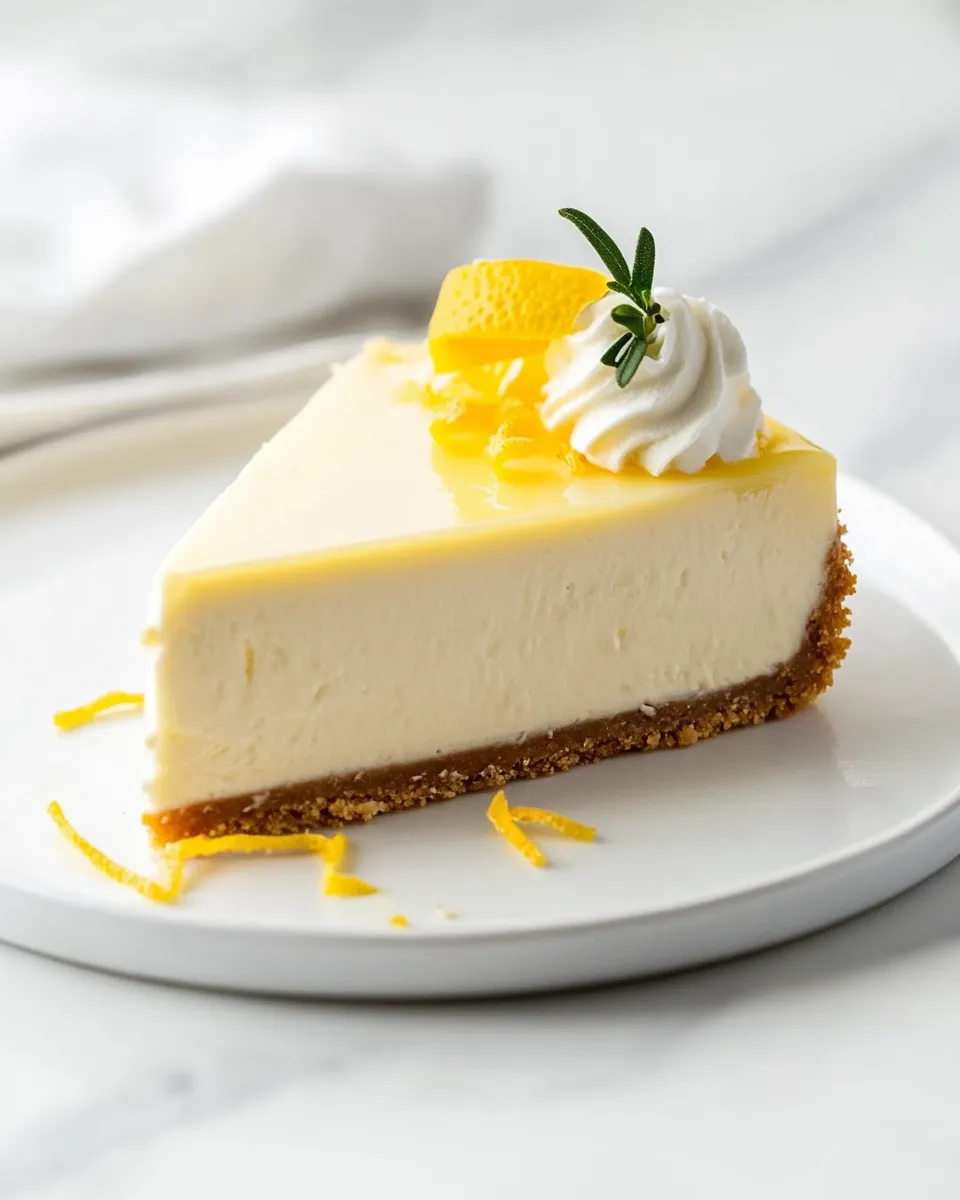
I love this lemon cheesecake because it balances bright citrus with a creamy, indulgent filling. It’s the kind of dessert that looks impressive but behaves predictably when you follow a few straightforward techniques. You’ll get a tender, slightly tangy center and a crisp, nutty crust that holds up to slicing.
This recipe relies on a water bath and patient cooling, which are the two habits that reliably prevent cracks and produce a silky texture. I’ll walk you through exactly what to expect at each stage, what tools help, and the small habits that make slicing clean and serving simple. No tricks, just practical steps that give you a beautiful cake every time.
Whether you’re baking for a special occasion or a weekend coffee crowd, this version is sturdy enough to travel yet delicate on the fork. Read the steps through once before you start. Prep once, then enjoy the calm rhythm of assembly and a resting time that does most of the work for you.
Ingredient List
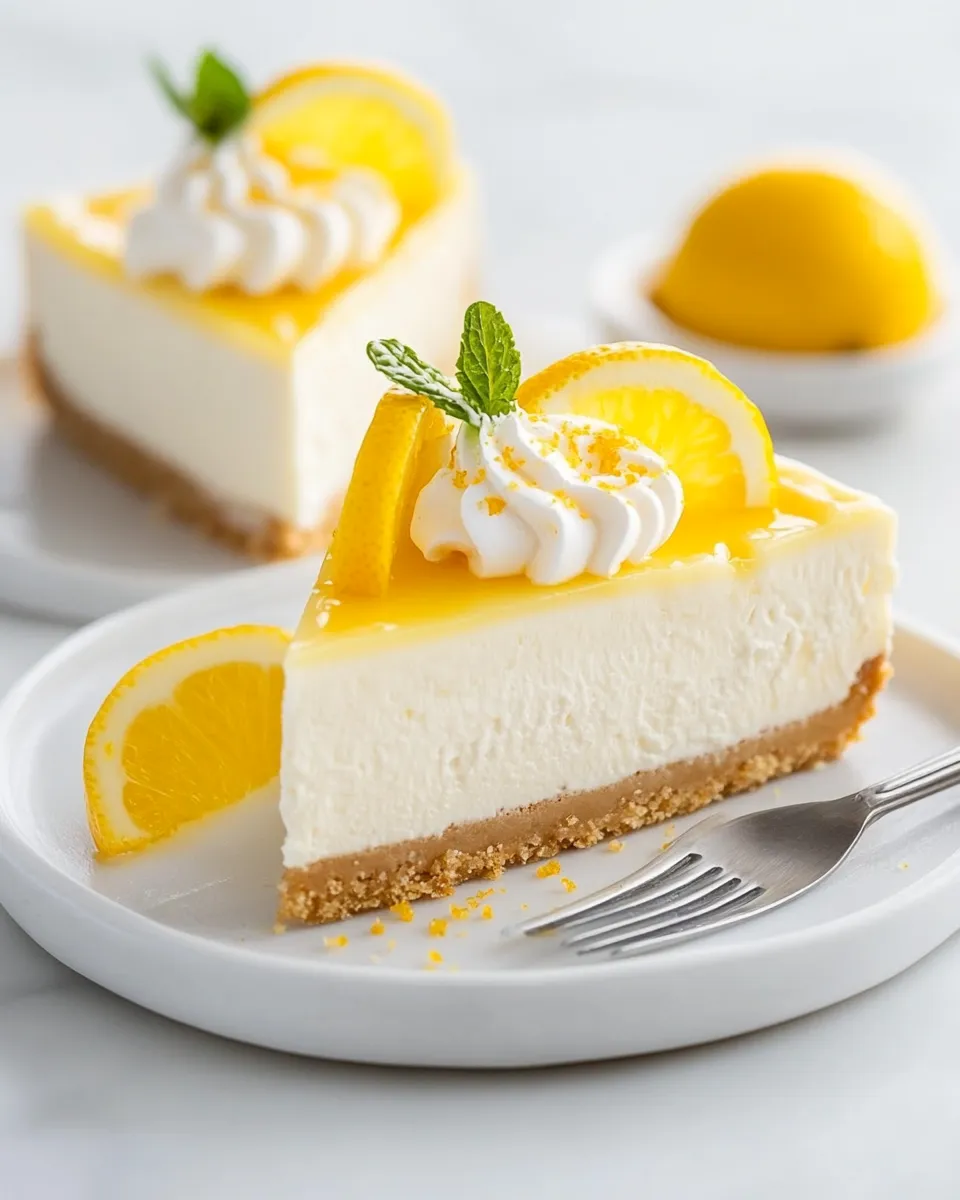
- 1 ½ cups graham cracker crumbs — the main component of the crust; press firmly to form a stable base.
- ½ cup Bob’s Red Mill® Super-Fine Natural Almond Flour — adds flavor and texture to the crust and helps it hold together.
- 3 tablespoons sugar — sweetens the crust and balances the almonds’ nuttiness.
- 6 tablespoons butter, melted — binds the crumbs; melted butter helps the crust firm up as it cools.
- 1 cup granulated sugar — used in the filling for sweetness and structure.
- Zest of 2 lemons — infuses the sugar with lemon oil for aromatic citrus flavor.
- 32 ounces cream cheese, room temperature (4 [8-ounce] packages) — the rich base of the filling; room temperature prevents lumps.
- 4 large eggs, room temperature — add richness and help set the filling; room temperature eggs incorporate more smoothly.
- 2 teaspoons pure vanilla extract — rounds and deepens the lemon flavor.
- ¼ cup freshly squeezed lemon juice — provides bright acidity that defines the cheesecake’s lemon character.
- ⅓ cup heavy cream — lightens the filling and contributes to a silky mouthfeel.
- 1 cup lemon curd — spread on top before serving for concentrated citrus flavor and glossy finish.
- Whipped cream — optional garnish to add a light, airy counterpoint to the dense filling.
- Lemon slices — optional for a fresh, decorative finish on the plate or top of the cake.
Lemon Cheesecake Cooking Guide
- Preheat the oven to 350°F (175°C). Prepare a 9-inch springform pan: remove the bottom from the ring, place the bottom piece on a sheet of foil and wrap the bottom with foil, then reattach the ring and fasten. Spray the inside of the assembled pan with nonstick cooking spray. Wrap the outside bottom and sides of the springform pan with two layers of heavy-duty foil to prevent leaks during a water bath.
- In a medium bowl, combine 1 ½ cups graham cracker crumbs, ½ cup almond flour, and 3 tablespoons sugar until evenly distributed.
- Stir in 6 tablespoons melted butter until the crumbs are evenly moistened. Transfer the crumb mixture to the prepared springform pan. Press the crumbs firmly and evenly into the bottom and about 1/2–1 inch up the sides to form a crust.
- Bake the crust in the preheated oven for 10 minutes. Remove the pan from the oven and set it on a cooling rack.
- While the crust bakes or immediately after removing it from the oven, bring a kettle of water to a boil for the water bath (you will use this after assembling the cheesecake).
- In a medium bowl, combine 1 cup granulated sugar and the zest of 2 lemons. Rub them together with your fingertips until the sugar is fragrant.
- In the bowl of a stand mixer fitted with the paddle attachment, or in a large bowl with an electric mixer, beat 32 ounces cream cheese (room temperature) and the lemon-scented sugar on medium speed for about 2 minutes, until smooth. Scrape down the sides of the bowl and mix an additional 30 seconds.
- With the mixer on low, add the 4 large eggs (room temperature) one at a time, mixing briefly after each addition. Scrape down the sides of the bowl after adding the second and after adding the fourth egg. After the final egg and a scrape, mix 30 seconds more until the batter is smooth and creamy.
- Add 2 teaspoons pure vanilla extract, ¼ cup freshly squeezed lemon juice, and ⅓ cup heavy cream. Mix on low to medium speed just until combined, about 30 seconds. Do not overmix.
- Pour the cheesecake filling evenly over the prebaked crust in the foil-wrapped springform pan.
- Place the springform pan into a larger, rimmed roasting pan. Carefully pour the boiling water into the roasting pan until it reaches about halfway up the sides of the springform pan. Loosely tent a piece of foil over the roasting pan (do not seal tightly).
- Bake the cheesecake at 350°F for 55–65 minutes, until the edges appear set and the center still has a slight jiggle. When done, turn off the oven and crack the oven door open. Let the cheesecake rest in the cooling oven for 1 hour.
- After the hour, carefully lift the springform pan out of the water bath and remove the foil wrapping. Place the cheesecake on a cooling rack and allow it to cool completely to room temperature.
- Once cooled, refrigerate the cheesecake (still in the pan) for at least 8 hours, or overnight, before serving.
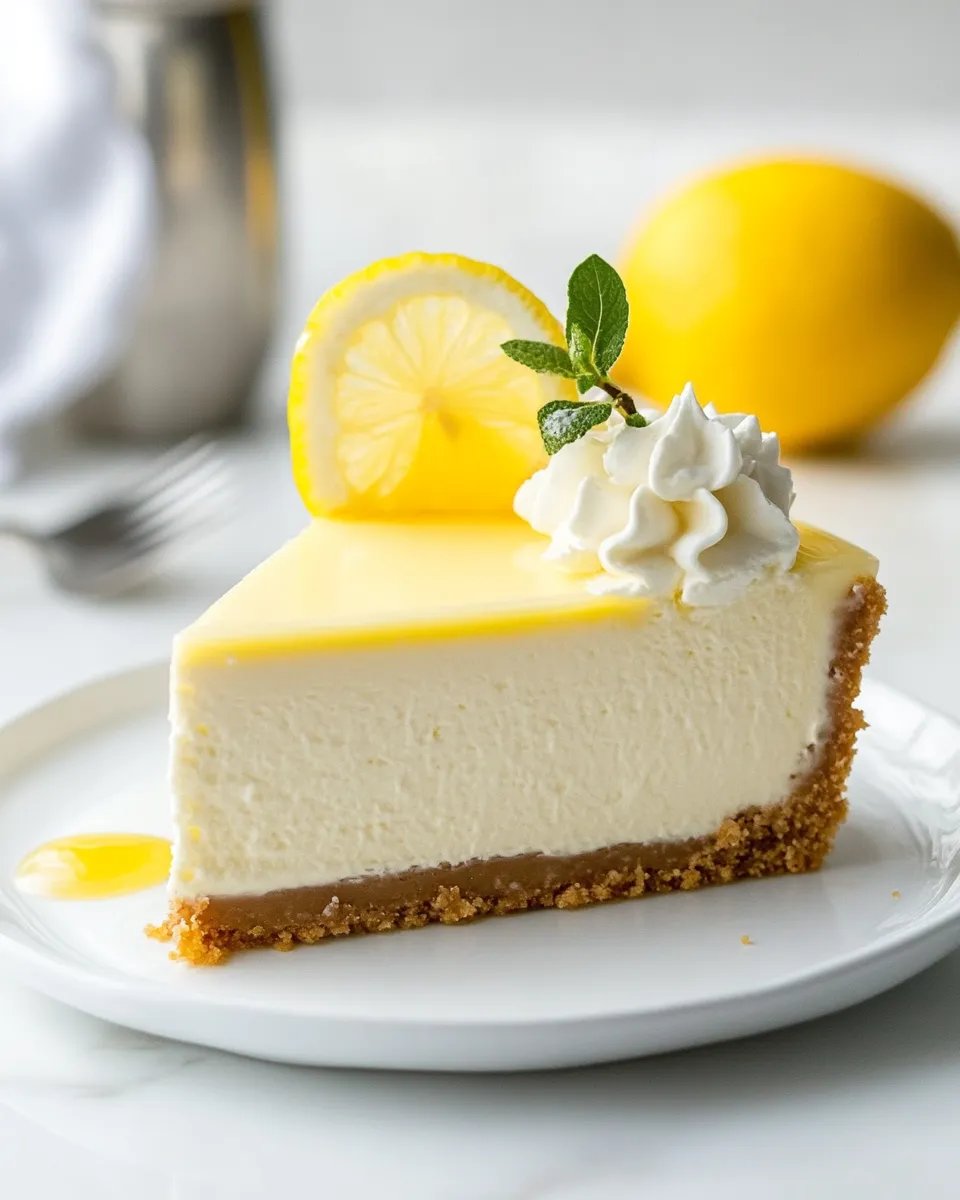
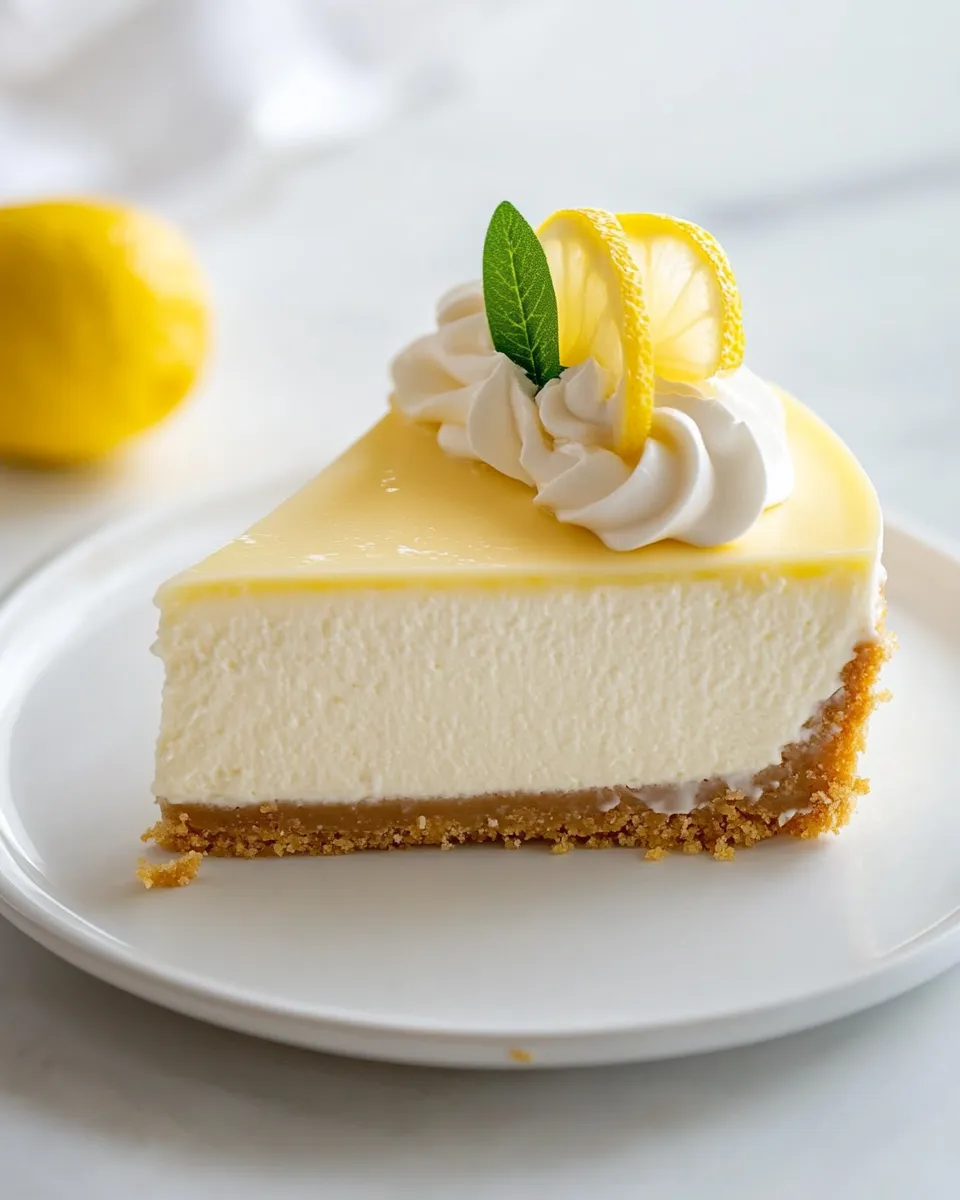
- Just before serving, spread 1 cup lemon curd over the top of the chilled cheesecake. If desired, top with whipped cream and lemon slices.
The Upside of Lemon Cheesecake
This lemon cheesecake offers a few clear benefits that make it a reliable go-to dessert. First, the flavor profile is bright and familiar; lemon adds freshness that keeps the richness from feeling heavy. Second, the structure is forgiving because the recipe uses a dense cream cheese filling combined with a nut-enhanced crust, so slices hold their shape when chilled properly.
The use of lemon-zested sugar gives an aroma that feels like it came from a pastry shop without extra work. The water bath and slow cool produce a smooth, crack-free top most of the time, so you end up with a professional finish. Finally, the assembled cake stores well in the refrigerator, so you can bake a day ahead and have stress-free entertaining.
Budget & Availability Swaps
When ingredients are hard to find or you want to trim cost, a few simple swaps work well:
– If Bob’s Red Mill® Super-Fine Natural Almond Flour is unavailable or costly, use regular almond meal or substitute with an equal measure of finely ground toasted walnuts or pecans in the crust. Expect a slightly different flavor and color.
– Graham cracker crumbs can be replaced with crushed digestive biscuits, shortbread, or plain graham-style cookies depending on what you have on hand.
– If heavy cream is scarce, a small amount of full-fat sour cream can add richness in its place; use it sparingly and add a bit less to avoid thinning the batter too much.
– Lemon curd can be store-bought or skipped; a thin glaze made from powdered sugar and lemon juice works in a pinch though it won’t be as glossy or intense.
These swaps affect flavor and texture subtly but keep the technique unchanged. Keep amounts the same and focus on handling and temperature for consistent results.
Recommended Tools
– 9-inch springform pan (with reliable latch) — essential for unmolding without damaging the sides.
– Heavy-duty foil — wrap the pan to prevent water bath leaks.
– Rimmed roasting pan — large enough to hold the springform with space for water.
– Stand mixer with paddle attachment or hand mixer — for smooth, lump-free filling.
– Microplane or fine grater — for zesting lemons to get fine, fragrant zest.
– Rubber spatula — for scraping the bowl clean and smoothing the top before baking.
– Instant-read thermometer (optional but helpful) — to check the cake’s center if you’re unsure; the center should register around 150–155°F when done but still jiggle slightly.
These tools aren’t all mandatory, but they make the process simpler and reduce the chance of error.
Mistakes That Ruin Lemon Cheesecake
– Adding cold ingredients: Cold cream cheese or cold eggs lead to lumps in the batter. Let the cream cheese and eggs reach room temperature before starting.
– Overmixing after eggs: Once eggs are added, mix only until incorporated. Overbeating traps air and can cause cracks or a dry texture.
– Skipping the water bath: The water bath provides gentle, even heat. Without it, the edges overcook and the center can crack or dry out.
– Removing the cheesecake too quickly: Don’t force it. Rapid cooling leads to collapse or cracks. Let it sit in the turned-off oven, then cool completely at room temperature before chilling.
– Puncturing the foil or using thin foil only: Leaks will let water into the cake and ruin the texture. Double-wrap with heavy-duty foil for peace of mind.
Avoid these common missteps and your results will be consistently good.
Holiday & Seasonal Touches
Lemon cheesecake adapts well to seasons. For spring and summer, brighten plates with fresh berries and a sprig of mint. For winter, swap lemon slices for poached pears or a compote of spiced citrus segments. A thin layer of berry coulis under the lemon curd adds color and pairs well on holiday dessert tables.
For decorating, pipe small rosettes of lightly sweetened whipped cream around the edge and finish with thin lemon slices or candied zest. These touches transform the cake for special occasions without changing the base recipe or technique.
What Could Go Wrong
Here are specific failures and how to handle them:
– Surface cracks: Usually from overbeating or temperature shock. If you get small cracks, cover the top with lemon curd and they’ll be hidden. Large cracks may mean you overmixed or cooled too quickly.
– Soggy crust: Water entering through the foil wrap causes a soggy bottom. If you notice this after baking, remove excess moisture with paper towels and chill; it’s still edible but less crisp.
– Runny center after chilling: If the center never set, the cake either didn’t bake long enough or it was undercooked before the oven cooldown. Put the cake back in a 325°F oven in its water bath for 10–15 minutes and then cool slowly.
– Grainy texture: Overheating or curdled dairy can cause graininess. Avoid baking at higher temperatures and don’t overcook the filling.
Most problems are solvable; the fixes usually involve cautious re-baking, well-sealed foil, or simple cosmetic covers like curd or whipped cream.
Freezer-Friendly Notes
You can freeze the cheesecake for longer storage. Best approach: cool and chill completely, then wrap the whole springform pan (unlatch if you prefer) tightly in plastic wrap and two layers of aluminum foil. Freeze up to 2 months.
To thaw: move to the refrigerator for 24 hours. Unwrap and allow it to sit at room temperature for 30–60 minutes before serving so the texture relaxes. Avoid thawing at room temperature for extended periods to prevent sogginess at the base.
If you plan to freeze slices, wrap each slice individually in plastic wrap and place in an airtight container with parchment between layers. Thaw in the fridge overnight.
Handy Q&A
Q: Do I have to use a water bath?
A: Yes. The water bath moderates oven temperature and reduces the risk of cracks and uneven baking.
Q: Can I make this without almond flour?
A: Yes. The almond flour enhances crust flavor and texture; if you remove it, increase graham cracker crumbs to compensate or use another finely ground nut.
Q: Why do I need lemon-zested sugar?
A: Rubbing zest into the sugar releases fragrant oils that distribute evenly in the filling for a brighter, integrated lemon flavor.
Q: How do I get really clean slices?
A: Chill thoroughly for at least 8 hours. Use a sharp knife dipped in hot water and wiped dry between each cut.
Q: Can I use low-fat cream cheese?
A: Full-fat cream cheese gives the best texture and stability. Low-fat versions can be runnier and affect set and mouthfeel.
Bring It to the Table
Serve this lemon cheesecake chilled, after spreading the lemon curd and finishing with whipped cream or lemon slices if you like. A thin band of lemon curd at the edge and small whipped rosettes make each slice look intentional and elegant. For plating, a dot of extra lemon curd or a few fresh berries beside the slice adds color.
If you’re transporting the cake, keep it chilled in a cooler with ice packs until just before serving. Slice with a warmed knife for clean edges, serve on a small dessert fork, and expect compliments. This is a dessert that rewards patience — the resting and chilling steps truly make the texture sing. Enjoy the bright, creamy payoff.

Lemon Cheesecake
Ingredients
Ingredients
- 1 1/2 cupsgraham cracker crumbs
- 1/2 cupBob’s Red Mill® Super-Fine Natural Almond Flour
- 3 tablespoonssugar
- 6 tablespoonsbuttermelted
- 1 cupgranulated sugar
- Zest of 2 lemons
- 32 ouncescream cheeseroom temperature 4 [8-ounce] packages
- 4 large eggsroom temperature
- 2 teaspoonspure vanilla extract
- 1/4 cupfreshly squeezed lemon juice
- 1/3 cupheavy cream
- 1 cuplemon curd
- whipped creamoptional
- lemon slicesoptional
Instructions
Instructions
- Preheat the oven to 350°F (175°C). Prepare a 9-inch springform pan: remove the bottom from the ring, place the bottom piece on a sheet of foil and wrap the bottom with foil, then reattach the ring and fasten. Spray the inside of the assembled pan with nonstick cooking spray. Wrap the outside bottom and sides of the springform pan with two layers of heavy-duty foil to prevent leaks during a water bath.
- In a medium bowl, combine 1 ½ cups graham cracker crumbs, ½ cup almond flour, and 3 tablespoons sugar until evenly distributed.
- Stir in 6 tablespoons melted butter until the crumbs are evenly moistened. Transfer the crumb mixture to the prepared springform pan. Press the crumbs firmly and evenly into the bottom and about 1/2–1 inch up the sides to form a crust.
- Bake the crust in the preheated oven for 10 minutes. Remove the pan from the oven and set it on a cooling rack.
- While the crust bakes or immediately after removing it from the oven, bring a kettle of water to a boil for the water bath (you will use this after assembling the cheesecake).
- In a medium bowl, combine 1 cup granulated sugar and the zest of 2 lemons. Rub them together with your fingertips until the sugar is fragrant.
- In the bowl of a stand mixer fitted with the paddle attachment, or in a large bowl with an electric mixer, beat 32 ounces cream cheese (room temperature) and the lemon-scented sugar on medium speed for about 2 minutes, until smooth. Scrape down the sides of the bowl and mix an additional 30 seconds.
- With the mixer on low, add the 4 large eggs (room temperature) one at a time, mixing briefly after each addition. Scrape down the sides of the bowl after adding the second and after adding the fourth egg. After the final egg and a scrape, mix 30 seconds more until the batter is smooth and creamy.
- Add 2 teaspoons pure vanilla extract, ¼ cup freshly squeezed lemon juice, and ⅓ cup heavy cream. Mix on low to medium speed just until combined, about 30 seconds. Do not overmix.
- Pour the cheesecake filling evenly over the prebaked crust in the foil-wrapped springform pan.
- Place the springform pan into a larger, rimmed roasting pan. Carefully pour the boiling water into the roasting pan until it reaches about halfway up the sides of the springform pan. Loosely tent a piece of foil over the roasting pan (do not seal tightly).
- Bake the cheesecake at 350°F for 55–65 minutes, until the edges appear set and the center still has a slight jiggle. When done, turn off the oven and crack the oven door open. Let the cheesecake rest in the cooling oven for 1 hour.
- After the hour, carefully lift the springform pan out of the water bath and remove the foil wrapping. Place the cheesecake on a cooling rack and allow it to cool completely to room temperature.
- Once cooled, refrigerate the cheesecake (still in the pan) for at least 8 hours, or overnight, before serving.
- Just before serving, spread 1 cup lemon curd over the top of the chilled cheesecake. If desired, top with whipped cream and lemon slices.
Equipment
- KitchenAid 9-Speed Digital Hand Mixer
Notes
Optional: top with whipped cream and lemon slices just before serving.