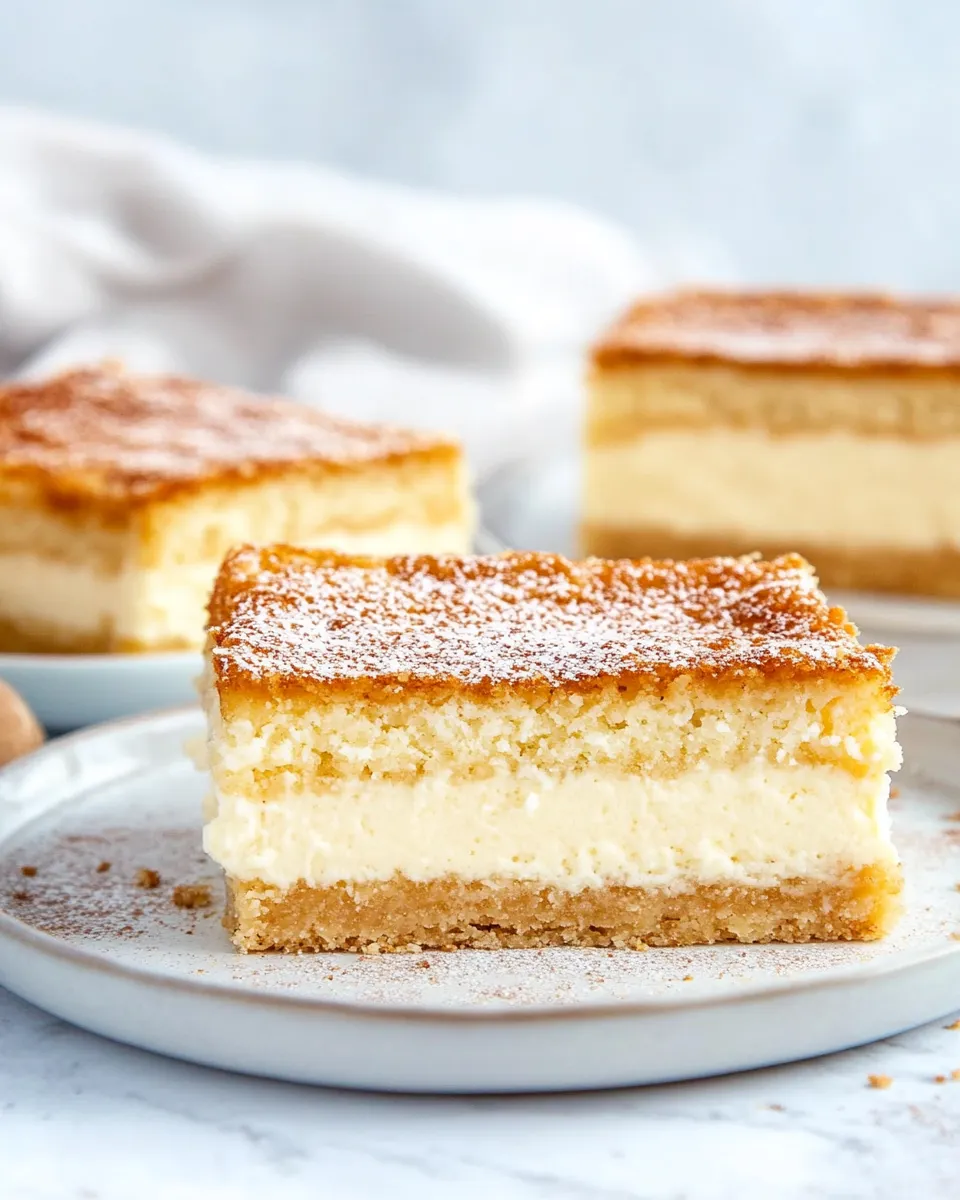
I love dessert recipes that look like they took all day but actually come together in a single baking pan. This Sopapilla Cheesecake is one of those weeknight-into-weekend magic tricks: creamy, cinnamon-sugary filling sandwiched between flaky crescent dough, baked until golden. It tastes like churro-meets-cheesecake and it disappears fast whenever I bring it to a party.
The method is straightforward, and the ingredients are pantry-friendly. You don’t need to fuss with a water bath or temperatures—just room-temperature cream cheese, canned crescent dough, a little vanilla and butter, and a cinnamon-sugar topping. I’ve tested timing, oven position, and a few small tricks so you get a reliably set filling and crisp, golden pastry every time.
Below I walk you through the exact ingredients and steps, then cover the tweaks, tools, and fixes I rely on. If you want a showstopper dessert that’s simple to assemble but still impressive, this one consistently delivers.
What Goes In
- 28-ounce cans (450 g) refrigerated crescent roll sheets, divided — forms the top and bottom pastry layers; if you can find the seamless dough sheets that’s ideal but crescent rolls can be used too.
- 1 ½ teaspoons ground cinnamon — adds the warm churro flavor in the cinnamon-sugar topping.
- 1 ¼ cups (250 g) granulated sugar, divided — sweetens both the filling and the cinnamon-sugar topping; the split keeps balance.
- 24 ounces (680 g) cream cheese, at room temperature — the rich, tangy base for the cheesecake layer; room temperature ensures a smooth batter.
- 2 teaspoons (10 ml) pure vanilla extract — rounds and brightens the cream cheese filling.
- ¼ cup (56 g) salted butter, melted — brushed over the top layer so the cinnamon-sugar sticks and the crust browns.
The Method for Sopapilla Cheesecake (Churro Cheesecake)
- Position an oven rack in the lower-middle slot and preheat the oven to 350°F (180°C) (160°C for a fan oven).
- Lightly spray a 9×13-inch (23 x 33 cm) baking pan with nonstick spray.
- Unroll one can of crescent roll dough (or one crescent roll sheet). Press any seams together to form one continuous layer and press this layer into the bottom of the prepared pan so it covers the bottom (and slightly up the sides). If using a seamless sheet, simply press it to fit the pan.
- In a small bowl, stir together 1/4 cup (of the) granulated sugar and 1 1/2 teaspoons ground cinnamon; set aside.
- In a mixing bowl, beat 24 ounces (680 g) room-temperature cream cheese with 1 cup of the granulated sugar and 2 teaspoons (10 ml) pure vanilla extract until smooth and well combined.
- Spread the cream cheese mixture evenly over the crescent dough layer in the pan.
- Unroll the remaining can/sheet of crescent roll dough, press seams together to form a single layer, and place it over the cream cheese layer. Gently press the top layer’s edges to the bottom layer to seal.
- Drizzle the 1/4 cup (56 g) melted salted butter evenly over the top dough.
- Sprinkle the reserved cinnamon-sugar mixture evenly over the buttered top.
- Bake uncovered for 30–40 minutes, until the top is slightly golden brown and the filling is set.
- Remove from the oven and let cool in the pan for at least 30 minutes before slicing into squares.
What Makes This Recipe Special
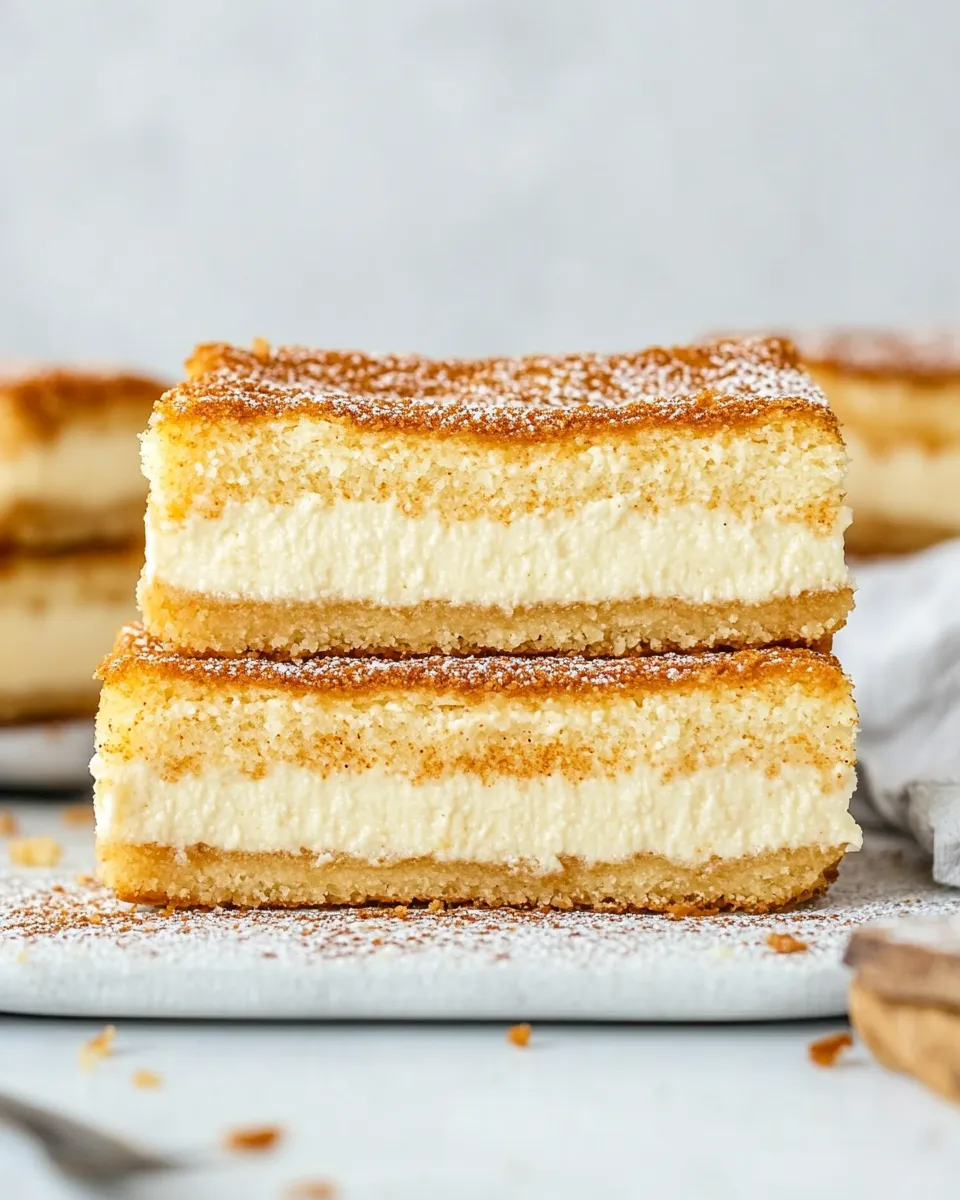
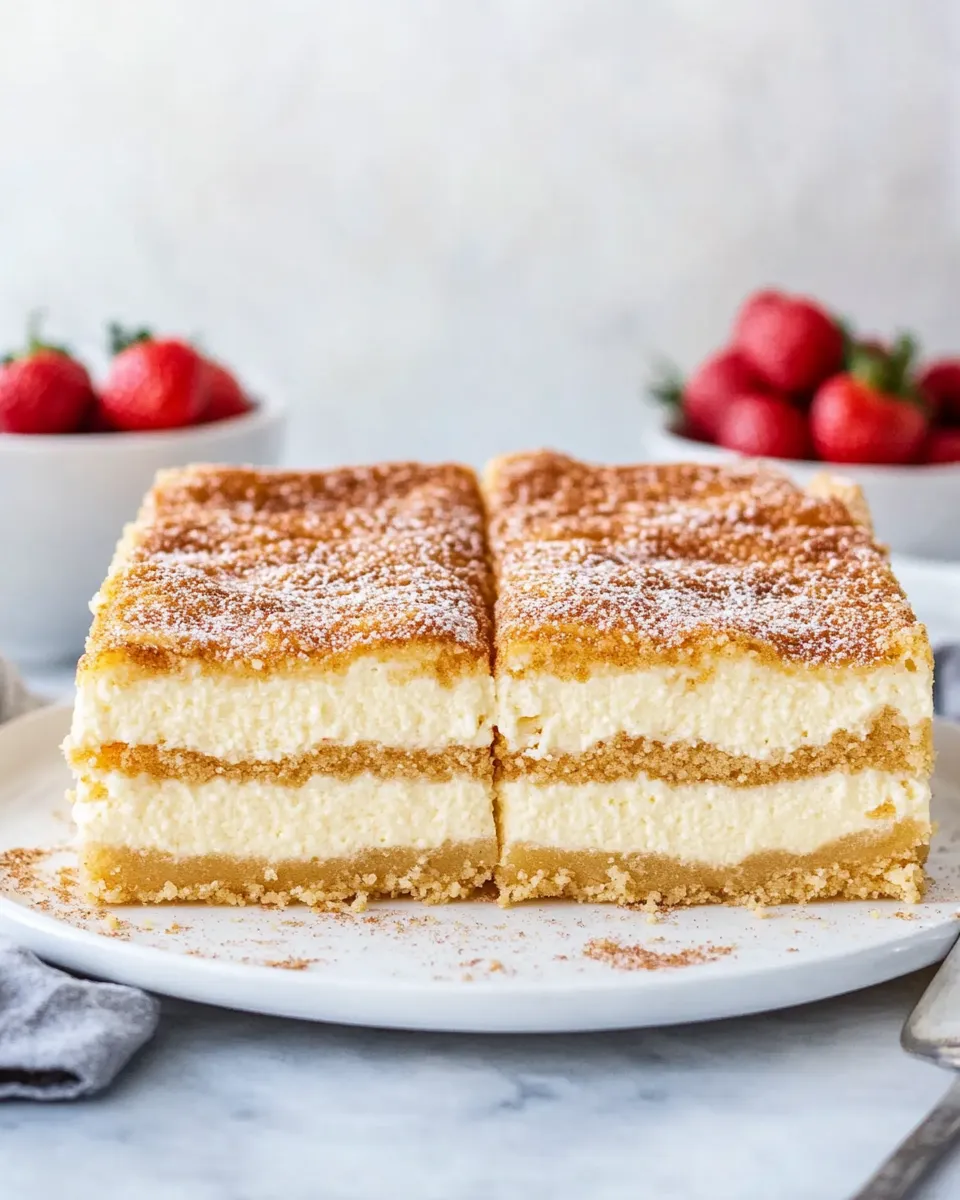
This dessert succeeds because it balances textures: flaky, buttery pastry on the outside and a lusciously smooth cream cheese layer inside. The cinnamon-sugar finish gives it that churro or sopapilla vibe—crisp sweetness on top, creamy tang below. It’s also forgiving. The assembly is simple and it holds up well for serving a crowd.
Because the filling is no-bake (aside from the oven’s gentle heat to set it), you get a reliably creamy interior without fussing over cracks or water baths. The use of two crescent layers creates an elegant two-tone bake that looks far fancier than the effort required.
If You’re Out Of…
- Crescent roll sheets — you can use individual crescent rolls pressed into a sheet as directed; press seams carefully so the bottom layer doesn’t leak filling. Alternatively, a rolled-out sheet of puff pastry will give a flakier, slightly different texture but will still work.
- Salted butter — use unsalted butter plus a light pinch of salt in the melted butter if you prefer to control sodium.
- Granulated sugar — superfine caster sugar will dissolve faster in the filling; brown sugar will change the flavor and color and is not recommended for the topping if you want that classic cinnamon-sugar look.
- Cream cheese — full-fat gives the best texture. Reduced-fat versions may be firmer and less silky but can be used if preferred.
Tools of the Trade
- 9×13-inch (23 x 33 cm) baking pan — the recipe is scaled for this size; use this exact pan for cooking time accuracy.
- Stand mixer or hand mixer — makes beating the cream cheese smooth and lump-free faster and easier.
- Rubber spatula — for scraping the bowl and spreading the cream cheese layer evenly.
- Small bowl and fork or small whisk — to mix the cinnamon and sugar.
- Measuring cups and spoons — for accurate measurements, especially the butter and cinnamon.
- Oven mitts and cooling rack — for safe handling and proper cooling.
Watch Outs & How to Fix
Top is browning too quickly
If the top starts to get too brown before the filling has set, tent loosely with foil for the remaining baking time. That slows browning and allows the interior to finish without overcooking the pastry.
Filling is lumpy
That usually means the cream cheese wasn’t fully softened. Next time, let it sit at room temperature longer or warm it gently in 10–15 second increments in the microwave, then beat until smooth. If you notice lumps after spreading, scrape off the layer and rebeat the filling.
Filling is runny after baking
Cool longer. The recipe asks you to cool for at least 30 minutes in the pan—this matters. If the center still seems soft after cooling, chill it in the fridge for an hour or two before slicing; the filling will firm up as it cools.
Seams open and filling leaks
Press seams firmly when forming the top and bottom layers. If using individual crescent pieces, overlap the seams and press with a rolling pin or your fingers to seal. A shallow lip up the side of the pan helps contain any small leaks.
Health-Conscious Tweaks
- Lower sugar — you can reduce the sugar in the cream cheese filling by up to 25% with minimal flavor loss, but keep the cinnamon-sugar topping for texture and that classic finish.
- Lower-fat cream cheese — use a lighter cream cheese to cut calories; expect a slightly less lush mouthfeel.
- Portion control — cut into smaller squares; this dessert is rich, so 12–16 smaller pieces satisfy without overindulging.
- Whole-grain pastry option — if you want to increase fiber, use a whole-grain puff pastry if available, though it will change the flavor and flakiness.
What I Learned Testing
First, room-temperature cream cheese is non-negotiable. I tried a batch with slightly chilled cheese and it stayed lumpy even after long mixing. Let it sit until pliable.
Second, the bottom crescent layer benefits from a gentle press up the sides of the pan—this keeps the filling from spreading too far and creates tidy squares that hold together. And finally, don’t skip the cinnamon-sugar step. It’s ten seconds of work and it transforms the bake into something that tastes like a churro or sopapilla.
Make Ahead Like a Pro
Assemble ahead, bake later
You can assemble the pan, cover it tightly, and refrigerate for up to 24 hours before baking. Bring it back to room temperature for 20–30 minutes while the oven heats so the pastry bakes evenly.
Bake now, serve later
After baking and cooling, store covered in the refrigerator. It keeps well for 3–4 days. If you prefer it warm, reheat individual squares in a 325°F (160°C) oven for 8–10 minutes or microwave short blasts to avoid sogginess.
Your Questions, Answered
- Can I freeze it? Yes. Bake and cool completely, then wrap tightly and freeze for up to 2 months. Thaw overnight in the fridge, then bring to room temperature before serving.
- Can I halve the recipe? Yes, use an 8×8-inch pan and reduce baking time—start checking at 20 minutes and watch for a golden top and set filling.
- Does it need to be refrigerated? Yes. Because of the cream cheese, store any leftovers in the fridge.
Next Steps
Make this Sopapilla Cheesecake when you want a dessert that’s both effortless and crowd-pleasing. It’s great for potlucks, birthdays, or a cozy family treat. Once you’ve got the basic timing down, try small twists: a drizzle of chocolate sauce after baking, a spoonful of fruit compote on the side, or a dusting of powdered sugar just before serving.
If you make it, let me know which tweak you tried and how it went. And if you want a printable version or a shorter cheat-sheet for the oven, I can format that for you next.
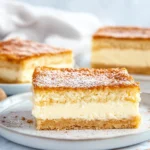
Sopapilla Cheesecake (Churro Cheesecake)
Ingredients
Ingredients
- ?28-ounce cans 450 grefrigerated crescent roll sheetsdivided – if you can find the seamless dough sheets that’s ideal but crescent rolls can be used too.
- ?1 1/2 teaspoonsground cinnamon
- ?1 1/4 cups 250 ggranulated sugardivided
- ?24 ounces 680 gcream cheeseat room temperature
- ?2 teaspoons 10 mlpure vanilla extract
- ?1/4 cup 56 gsalted buttermelted
Instructions
Instructions
- Position an oven rack in the lower-middle slot and preheat the oven to 350°F (180°C) (160°C for a fan oven).
- Lightly spray a 9×13-inch (23 x 33 cm) baking pan with nonstick spray.
- Unroll one can of crescent roll dough (or one crescent roll sheet). Press any seams together to form one continuous layer and press this layer into the bottom of the prepared pan so it covers the bottom (and slightly up the sides). If using a seamless sheet, simply press it to fit the pan.
- In a small bowl, stir together 1/4 cup (of the) granulated sugar and 1 1/2 teaspoons ground cinnamon; set aside.
- In a mixing bowl, beat 24 ounces (680 g) room-temperature cream cheese with 1 cup of the granulated sugar and 2 teaspoons (10 ml) pure vanilla extract until smooth and well combined.
- Spread the cream cheese mixture evenly over the crescent dough layer in the pan.
- Unroll the remaining can/sheet of crescent roll dough, press seams together to form a single layer, and place it over the cream cheese layer. Gently press the top layer’s edges to the bottom layer to seal.
- Drizzle the 1/4 cup (56 g) melted salted butter evenly over the top dough.
- Sprinkle the reserved cinnamon-sugar mixture evenly over the buttered top.
- Bake uncovered for 30–40 minutes, until the top is slightly golden brown and the filling is set.
- Remove from the oven and let cool in the pan for at least 30 minutes before slicing into squares.
Equipment
- 9 x 13-inch baking pan
- Hand Mixer
- Mixing Bowl
Notes
Some similar recipes call for an egg to be mixed into the cream cheese. I don’t find it necessary, but you can add it if you prefer your filling to be richer.
To Store:Keep these cheesecake bars in an airtight container in the fridge for up to 3 days, or freeze for up to 3 months.